
.png?1651848432)
By DAVE MYERS
Southwest Kansas Catholic
So quick and unexpected was the advance of the Taliban after U.S. forces exited from Afghanistan, that many of the Afghani forces working with the United States had no time even to say goodbye to family members when they were forced to flee.
For Hasibullah (Hasib), that meant leaving his wife and three small children in the war-torn country.
Like so many refugees from violent nations, Hasib had to make that impossible decision: stay and face the strong possibility of arrest or execution, or escape and try to clear the path for his family.
"My father was killed by the Taliban," he said sadly. "I have a brother in the Army, and another in the police. All are in danger."
Hasib worked as a guard with the U.S. forces. It seemed an unlikely role for the soft-spoken Afghan. But he also mentioned that he ran a grocery store, a role that seemed far more well-suited to the friendly Hasib.
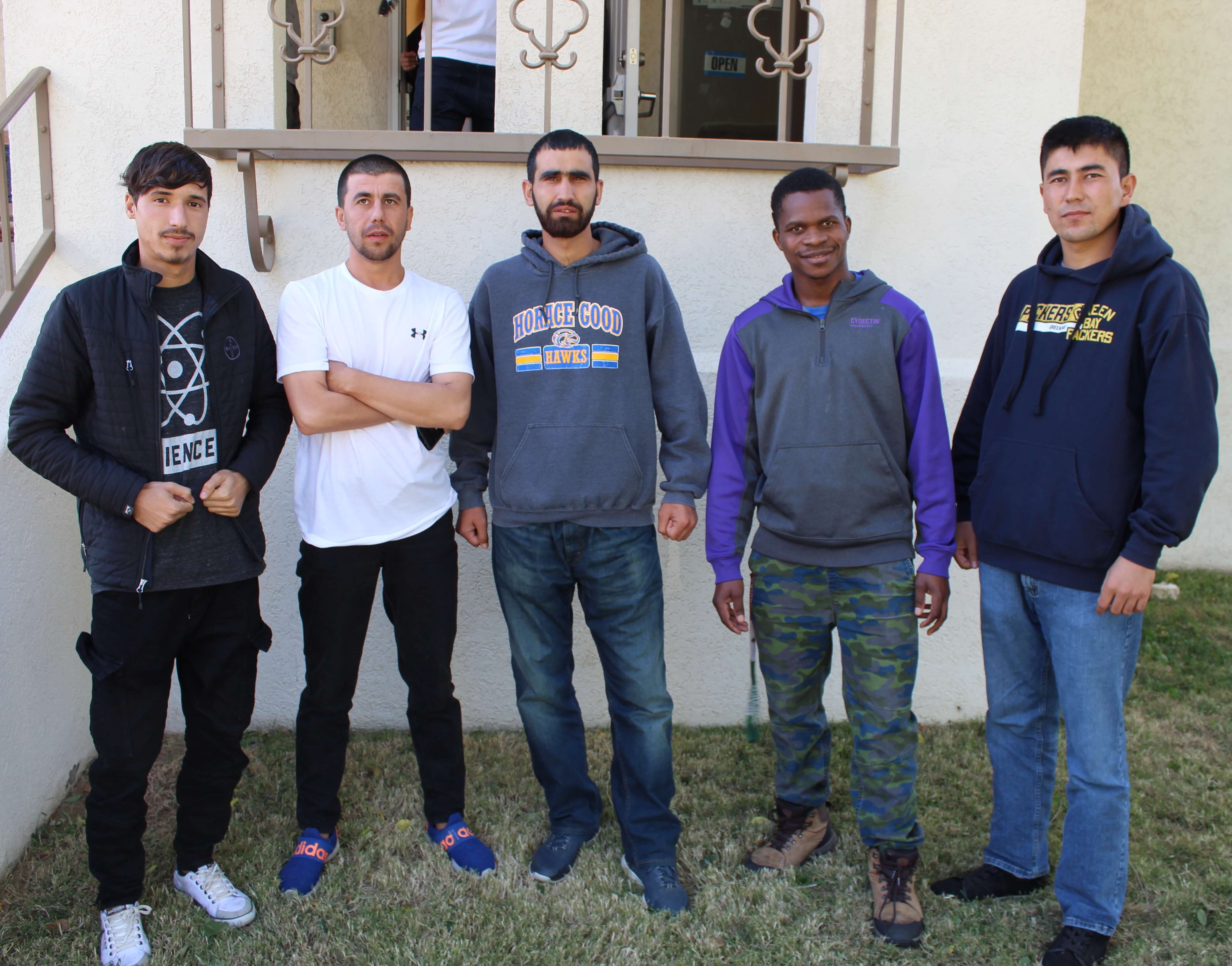
Hasib was one of four Afghani refugees sitting around a large table at the Catholic Charities offices in Garden City Oct. 27. Also seated were Hussain, Nashat and Nabiullah. Providing translations via telephone was another Afghan refugee, Abdullah. (Although they agreed to have their full names used, the SKC thought it safer for their families to withhold their last names.)
From the moment they arrived in Kansas, Catholic Charities has been at their sides, helping them to obtain housing as well as everyday needs. The four are waiting to obtain work permits and are eager to become employed.
Hussain was working with the special police force when the day came that he was forced to flee; he managed to escape on the same day that the Kabul airport was bombed Aug. 26.
"There were so many people in the airport," he said, sadly.
He left behind in Afghanistan his mother, a sister, and three brothers.
"I was working hard to support my family," Hussain said. "The Taliban came to my house looking for me. They asked my brother to find me, but my family said that they didn't have any contact with me."
Nabiullah was working as a mechanic with the Defense Department of Afghanistan when he was forced to leave behind his mother, four sisters and three brothers. His father had already been killed by the Taliban, and he knew that he could easily be next.
When asked if they were able to communicate with their families back in Afghanistan, Nashat, the youngest of the bunch, pulled out his phone.
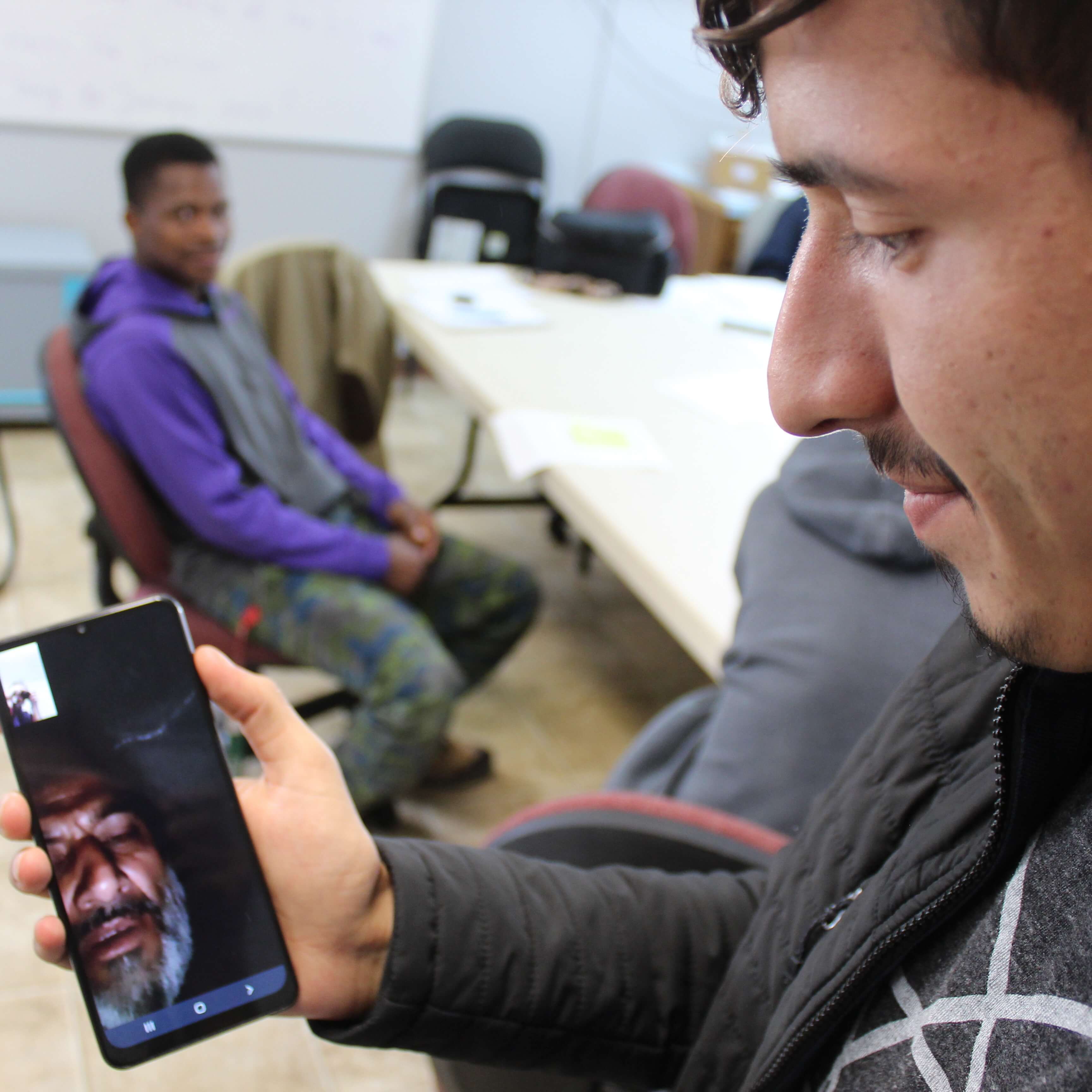 "It's midnight in Afghanistan," the translator said, but before the young man could be stopped, he had dialed his father in Afghanistan. Moments later a man with a slightly graying beard appears on the tiny screen.
"How are you?" I ask after Nashat calls me to the phone.
"I am fine," Nashat's father responds. "It is nice to meet you."
"And you! Are you safe?" I ask.
"Yes," he says. He is friendly. He reminds me a little of my own father.
I'm not sure whether he truly felt safe or was trying not to worry his son. Based on his son's plea that the Southwest Kansas Catholic somehow help to bring his family to the United States, it was obvious that his family's safety is foremost on Nashat's mind.
Each of the four men were sent to various military bases where they lived for a few weeks before coming to Kansas in October. This includes our translator, Abdullah, who had worked as an intelligence officer, helping the U.S. and Afghan forces track the enemy. He was out of state during the interview, and spoke by telephone loudspeaker.
When asked to share a pleasant memory from their homeland, Abdullah gave a shocking answer:
"My friends who worked with me..." he began to recall, but then added, "They went out for the weekend of fun far from Kabul, and the Taliban attacked and killed them. Our country is at war. We have no government." Any good memories, he said, have been replaced by concern for their families and friends still living in the war-ravaged country.
The removal of American forces from Afghanistan was completed Aug. 30, 2021 following an agreement by the Trump administration, and later the Biden administration, to reduce and then withdraw all U.S. forces. The Doha Agreement eventually led to the end of the United States' 20-year involvement in the War in Afghanistan. But what had begun as a promise by the Taliban to promote peace, has instead left a country in chaos.
When asked how their faith has helped them in their journey, Abdullah didn't quite understand the question, and instead answered by praising the Americans and Catholic Charities for their help.
Their wounds are very fresh. The four left their families barely a month ago, and it wasn't difficult to see the deep sadness and yearning in their hearts as they struggled to share their strong emotions.
Following the interview, after taking photos outside of the Catholic Charities office, Hasib, the former grocery store owner, in an outpouring of emotion, told me in broken English of the horrors he has experienced, and of his concern for his family. The translator was no longer on the line, so I couldn’t understand much of what he said, but I could easily read the message.
"I'm so sorry," I told him in response.
Bishop Gerald Vincke reminds us that the goal of the Synod of which we are all taking part is "to see everyone as a member of our family". After sitting with these young men for a few hours, it was easy to see past the soft veneer of their Muslim faith, the difference in cultures, and to instead see four young members of our human family who, like most of us, are simply seeking peace.