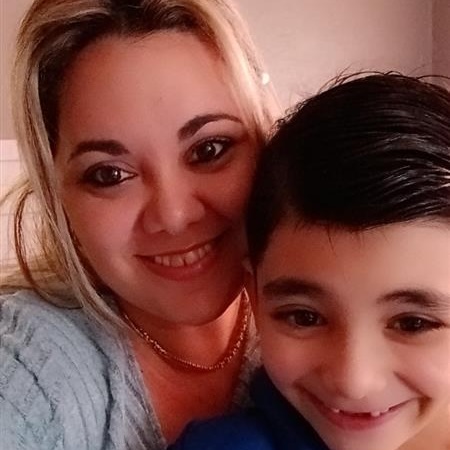
 The transition from Cuba to Kansas marked a profound change in Linet Garcia’s life, filled with both hope and significant challenges. Her journey from a university graduate in Cuba to a refugee, and now an Employment Specialist at Catholic Charities of Southwest Kansas, offers deep insight into the myriad difficulties faced by refugees as they adapt to life in the United States.
From Cuba to Kansas: A New Beginning
Linet's journey began in Moron, Cuba, where despite a successful academic career, including a university degree in English and French from the University of Santa Clara, economic and social upheaval shadowed her achievements. "Before COVID everything was okay, you know? You could live with a lot of shortages, but at least you could live? But then after COVID, everything changed," Linet recalls. The scarcity of essentials, coupled with a failing health system and declining opportunities, painted a grim reality that Linet could no longer ignore, especially as a mother.
Faced with increasing hardships and the dire need to provide a better future for her son Anthony, Linet made the heart-wrenching decision to leave Cuba. "I got divorced in the middle of COVID... I didn’t want to leave my country because I love my country, but I was not thinking of me anymore. I had to think of my boy," she explains. With the help of a family that she had previously taught English to, Linet applied for humanitarian parole and, in November 2023, she received her travel permission to move directly to the United States, avoiding the perilous journey many others face via Mexico. "Lots of Cubans have a hard time because they have to come all the way through Nicaragua, Guatemala, then Mexico, in order to cross the border and come here. Thankfully, I didn't do that. I just flew directly from the airport in Havana to Kansas. I took three planes, and I ended up in the Wichita airport. And then from Wichita, the family, my dear friends, picked me up."
Overcoming New Challenges in the United States
Upon arriving in Kansas, Linet encountered a world vastly different from Cuba. Every aspect of American life, from technological dependencies to cultural practices, posed significant adjustments. "It was my first time in a plane. It was my first time in an airport. I used to speak English with Canadians, so the accent was different. Everything was different. It was my first time using a credit card. You know what I mean? In our countries, we don't have electronic things. Here, you do it all by phone or online. We are not used to that. So it's very challenging to pay online," Linet shares, emphasizing the steep learning curve faced by newcomers.
"Most women in Cuba, we don't drive, right? We don't have cars. Mostly the ones that have the cars are the men. So the first challenge for a woman here is to drive." Linet explains.
"I came in December, so the weather was another thing. A storm hit in January, and you don't know how to dress. 'Oh my God, my boy. Is he warm enough?!' Am I putting too many clothes on him? Or, how do you wear the gloves or the scarf? It's the first time for everything. So everything is challenging." Linet highlights the everyday difficulties that many refugees face.
Her initial experiences with basic tasks like navigating an airport, using a credit card, or shopping in a supermarket were daunting. But with the support of the family that sponsored her parole, and the Catholic Charities community, Linet quickly found her footing. "When I first came, my family—the family that brought me, they helped me a lot because they said, 'hey, this is how you pay in Walmart.' I didn't know how to pay Walmart or, you know, to pass the products over the scanner. I didn't know anything. So they helped me in that sense." That same family also sent Linet to Catholic Charities. This advice led her to her current role as an Employment Specialist, where she leverages her personal experiences and language skills to assist others.
Empowering Refugees at Catholic Charities
At Catholic Charities, Linet works directly with refugees, helping them enroll in the Employability Program and guiding them through the Family Self-Sufficiency Program. "I work with refugees, mainly Cubans and Haitians. I get to know them and the goals or barriers they have for employment and then I start working and helping them from that moment on, whether it's helping them with translation, creating a curriculum [resume], applying for jobs, or anything else they have to do to find a job here," Linet explains. Her approach is deeply personal and empathetic, often telling newcomers, "Hey, I was you eight months ago." Her firsthand understanding of their struggles makes her a great resource. "It's so easy for me to explain what to do and the steps that they need to do it because I was there. I had to do the same thing myself," she explains.
"My first family was a pregnant woman, and we helped them with housing as well, because they didn't have any place to live or anything... and then, we could pay for a house to rent for them, but they didn't have anything inside the house. So every day I found different things like a chair, or a plant or whatever for the living room. Because it was my first family, they had my personal number so they could call me whenever they needed something. When the mother delivered her baby, she had a complication and they had to go to Wichita. I was crying like a baby those days, because it was like it was me having that baby. So, yes, it was very touching for me. But now the baby is healthy. They are all good. The husband is working, and the mother passed her driving test. She has her driving license now, and she's going to start working very soon. So, yes, that was my very special family."
Linet’s enthusiasm and positive energy are infectious, and she focuses particularly on empowering women within the refugee community, who often face greater obstacles in finding employment. "Every time I get to help a family, I feel even better. Or if I get to help a woman, I'm all good. I'm very, very happy because men find jobs very quickly, but for women to find a job, it's very, very difficult," she says.
Looking Ahead with Hope and Gratitude
Despite the hurdles, Linet remains committed to her personal and professional growth. "The family that sponsored me said, 'Hey, you have to study.' And I said, 'Okay, let's do it.' So on June 28th, I graduated with my GED. I started in January and I finished in June. So I have my GED now." It's a significant accomplishment for Linet. "The thing is, my [academic certificates] aren't recognized here. They don't accept it here. So I say, well, I will do my GED. Because here, in every job, they ask you for a GED." Linet isn't finished; she hopes to continue her studies in interpretation to better serve her community.
More than anything, however, Linet is focused on setting a strong example for her son, ensuring he grows up with opportunities she fought hard to secure. "I am everything he has. So I always think about that and I say, well, if he sees that I'm a good person, and if he sees that I come to work every day and, and he knows human values and everything, I think he will be a great man. That's all I want, you know, because that's the main purpose for me to come here in the first place for my son. And so that's my priority."
Her advice to other refugees is straightforward but powerful: "You have to learn English... And then do all the paperwork that you need for your driving license, your residency, or whatever so that everything is legal here."
Linet’s story is a poignant reminder of the resilience required to navigate the complexities of resettlement and the critical role organizations like Catholic Charities play in supporting refugees through this transformative journey. Her story not only sheds light on the individual challenges of adaptation but also underscores the broader impact of community support in fostering successful integration and empowerment of refugees.